








Updated September 22026
If you have spent any time in Hawaii, you have probably heard a ukulele. You might hear one at a luau, in a hotel lobby, at a local music shop, or from a musician playing along Waikiki Beach.
The ukulele is closely associated with Hawaii today, but the instrument did not originate in the islands. Its history begins with Portuguese immigrants who arrived in Hawaii in the late 1800s. Over time, a small stringed instrument from Portugal became an important part of Hawaiian music and culture.
So where did the ukulele come from, and how did it become so closely connected to Hawaii?
Where Did the Ukulele Come From?
The ukulele has its roots in Portugal, particularly in Madeira and the Azores.
In 1879, the ship Ravenscrag arrived in Honolulu carrying Portuguese immigrants from Madeira. Many of these immigrants came to Hawaii to work in the islands’ growing sugar industry. They brought their music and instruments with them, including small four-stringed instruments related to the Portuguese braguinha.
The instrument was relatively small and easy to carry, but its sound quickly attracted attention in Honolulu.
One of the stories associated with the arrival of the Ravenscrag involves a Portuguese immigrant named João Fernandes. Historical accounts describe Fernandes playing a small stringed instrument after arriving in Honolulu. The story says that local Hawaiians were fascinated by the fast movement of his fingers as he played.
The exact details of the story have been passed down in different versions, but the connection between Portuguese immigrants, their instruments, and the development of the Hawaiian ukulele is well established.
Why Is It Called a Ukulele?
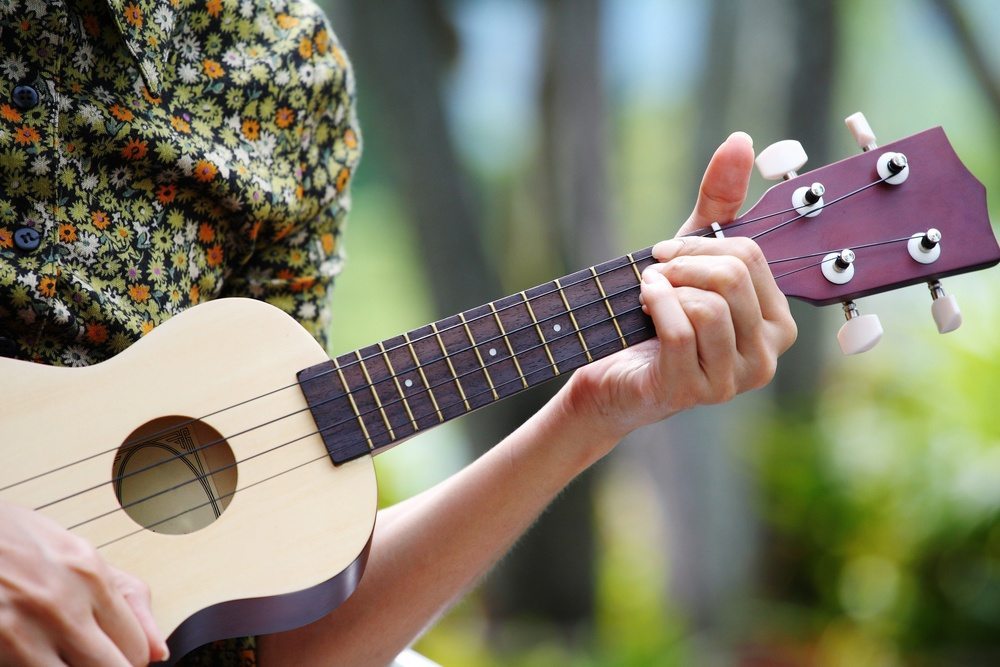
The Hawaiian word ukulele is commonly translated as “jumping flea.”
The name is often connected to the quick movement of a player’s fingers across the strings. There are also different historical explanations for how the name came to be used, so the exact origin of the term is not completely settled.
Whatever its original meaning, ukulele became the name associated with the Hawaiian version of the instrument.
The instrument itself also changed after arriving in Hawaii. Portuguese craftsmen living in Honolulu began making their own versions, adapting the design and sound to local tastes and materials.
The Men Who Helped Create the Hawaiian Ukulele
By the 1880s, Portuguese instrument makers were building ukuleles in Honolulu.
Three names are particularly important to the early history of the Hawaiian ukulele: Manuel Nunes, Augusto Dias, and José do Espírito Santo.
These craftsmen came from Portuguese musical traditions and helped develop the instrument that people would eventually recognize as the Hawaiian ukulele.
Their work was important because the ukulele was no longer simply an imported Portuguese instrument. Local makers were producing and modifying it in Hawaii, helping establish its own identity.
Hawaiian woods, including koa, later became strongly associated with ukulele construction. Koa is native to the Hawaiian Islands and is still valued by ukulele makers for its appearance and tone.
How the Ukulele Became Part of Hawaiian Culture
The ukulele’s popularity grew considerably during the reign of King David Kalākaua.
Kalākaua was a strong supporter of Hawaiian music, hula, and cultural traditions during a period when many aspects of Hawaiian culture were under pressure. He was also known to play the ukulele and supported musicians and cultural performances at the royal court.
The instrument’s presence around the Hawaiian monarchy helped give it a place within public Hawaiian culture.
This is an important part of the history of the ukulele. The instrument was not originally Hawaiian, but it became Hawaiian through the people who played it, built it, adapted it, and incorporated it into local music.
Kamaka and the Hawaiian Ukulele Tradition
Another important name in Hawaiian ukulele history is Kamaka.
Kamaka Hawaii was founded by Samuel Kamaka in Honolulu in the early 20th century. The company became known for handcrafted ukuleles, particularly instruments made from Hawaiian koa.
Kamaka remains one of the best-known ukulele makers in Hawaii, and its history is closely connected to the development of the modern Hawaiian ukulele.
If you visit Honolulu and spend time around local music shops, you will still see Hawaiian-made ukuleles and hear conversations about different woods, shapes, sizes, and sounds.
For visitors who want to take home something connected to Hawaiian culture, a locally made ukulele can be a much more meaningful souvenir than a mass-produced souvenir item.
How the Ukulele Became Popular in the United States
The ukulele eventually traveled beyond Hawaii.
One major moment came at the Panama-Pacific International Exposition in San Francisco in 1915. Hawaiian musicians performed for visitors from across the United States, introducing many mainland audiences to Hawaiian music and the ukulele.
Interest in the instrument grew quickly during the 1910s and 1920s. Ukuleles became popular in American music and were produced by manufacturers outside Hawaii as well.
The instrument’s popularity changed over the decades, but it never disappeared completely.
Later generations discovered the ukulele through folk music, popular culture, music education, and eventually the internet. Performers such as Israel Kamakawiwoʻole and Jake Shimabukuro also helped bring the sound of the ukulele to audiences around the world.
The Ukulele in Hawaii Today
The ukulele is still part of everyday musical life in Hawaii.
You can hear it at Hawaiian music performances, cultural events, luaus, local festivals, and family gatherings. Children learn to play it in schools and community programs, while professional musicians use it in everything from traditional Hawaiian music to jazz and contemporary arrangements.
Honolulu is also home to the Ukulele Festival Hawaii, an annual event that brings musicians and ukulele fans together at Kapiʻolani Park.
For visitors, this is one reason the ukulele can feel different in Hawaii than it does elsewhere. It is not simply an instrument associated with a particular vacation image. It has a real history in the islands and continues to be played by local musicians today.
Where Can You Hear Ukulele Music on Oahu?
You do not have to visit a music festival to hear a ukulele on Oahu.
Depending on where you go, you may hear live Hawaiian music at a luau, hotel, restaurant, cultural event, or local performance. Waikiki in particular has plenty of opportunities to encounter Hawaiian music while exploring the area.
A luau is another good introduction for visitors who want to experience several parts of Hawaiian culture together. Live music is usually accompanied by hula and other performances, giving visitors some context for the traditions behind the music.
The experience is different from simply listening to a ukulele recording because you are seeing the music as part of a larger cultural performance.
Is the Ukulele Originally Hawaiian?
No. The modern ukulele developed from small Portuguese stringed instruments brought to Hawaii by Portuguese immigrants in the 19th century.
But that does not make the ukulele any less Hawaiian today.
The instrument was adapted and developed in Hawaii, became associated with Hawaiian musicians and royalty, and eventually became an important part of Hawaiian music and cultural identity.
That history is what makes the ukulele particularly interesting. It is an example of how cultures influence one another and how an imported tradition can become something distinctly local over time.
From Portugal to Hawaii
The history of the ukulele is a story of migration, music, and cultural exchange.
Portuguese immigrants brought their musical traditions to Hawaii in the 1800s. Hawaiian musicians and instrument makers developed those traditions further. The ukulele then became associated with Hawaiian music before eventually spreading to audiences around the world.
So the next time you hear a ukulele in Hawaii, there is more behind those four strings than a familiar vacation sound. The instrument carries part of the history of the people and cultures that helped shape the islands.
Experience Hawaiian Culture on Oahu
One of the best ways to understand Hawaiian music and culture is to experience it in person. On Oahu, you can find Hawaiian music and hula performances alongside other local cultural experiences throughout the island.
If you’re planning your Oahu trip, explore more experiences with And You Creations.
Explore Oahu: andyoucreations.com
Find current offers: andyoucreations.com/ways-to-save/