





Hawaii is one of the most visited places on Earth. But most visitors only scratch the surface. Behind the beaches and resort pools is a living culture that stretches back over a thousands years like Polynesian voyagers, sacred chants and underground feasts. This guide brings it all together in one place. Whether you’re planning a trip, doing research, or just genuinely curious, here’s what Hawaiian culture actually looks like from the inside.
Hawaiian Language:
Hawaiian language is one of the most distinctive languages in the world. It uses only 12 letters: five vowels and seven consonants. Every syllable ends in a vowel. The rhythm is almost musical. For most of the 20th century, Hawaiian was nearly lost. By the 1980s, fewer than 2,000 people spoke it fluently. Then came the Hawaiian Renaissance, a cultural revival movement that brought the language back into schools, homes, and daily life. Today, Hawaiian language immersion schools are graduating fluent speakers again. Even if you’re just visiting, knowing a handful of Hawaiian words transforms your trip. You stop seeing street signs as obstacles and start reading the landscape the way locals do.
What Hawaii Eats and Why It Matters
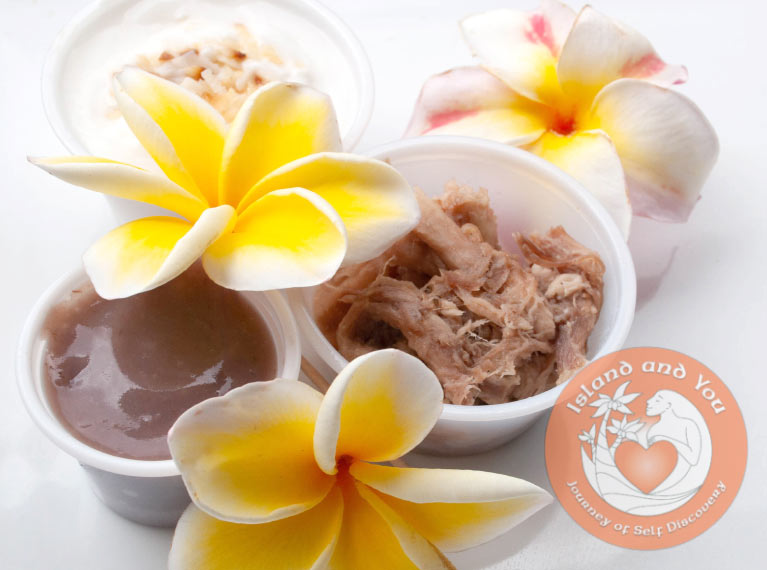
Hawaiian food is not just cuisine. It’s a timeline of immigration. Every dish tells a story about who came to the islands, when they arrived, and what they brought with them.
- Native Hawaiian: Poi, kalua pig, laulau, lomi lomi salmon, haupia
- Japanese Influence: Spam musubi, saimin, bento culture. Japanese planation workers arrived in the 1880s and fundamentally shaped what Hawaii eats today.
- Plate Lunch Culture: Two scoops rice, macaroni salad and a protein. Born on plantation fields. Still the most honest meal in Hawaii
- Polynesian Traditions: Underground cooking, shared feasting, food as spiritual offering. The laulau feast format comes directly from these traditions
Luau: More than a Dinner Show
Visitors often book a luau as an evening activity. Locals understand it as something older and more meaningful, a gathering from that has existed in Hawaii for centuries, rooted in celebration, community, and connection to the land. And its core, a traditional luau centers on the Imu, an underground pit lined with hot rocks and banana leaves where the kalua pig slow cooks for hours. Around it, the table fills with pol, laulau, haupia, and fresh fish. Hula tells the stories that words can’t carry. Fire knife dancers bring the Polynesian warrior spirit alive
On Oahu today, there are several ways to experience a luau, from large productions at resort hotels to intimate family gatherings on the North Shore. The experience varies widely. Knowing what you’re looking for matters.
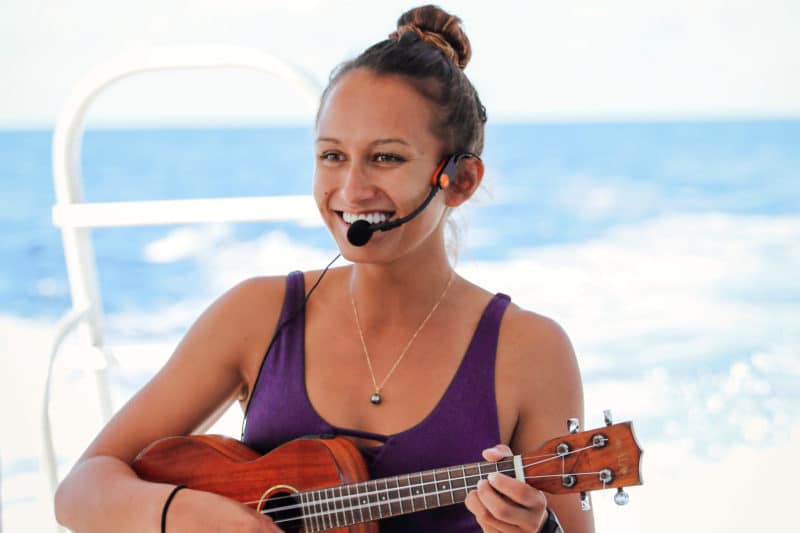
Music, Hula & Ukulele
In ancient Hawaii, there was no written language, so music carried everything. Mele (songs), oli (chants), and hula were not entertainment. They were records. They documented genealogy, mapped geography, honored gods, and passed down laws across generations.
Hula
Hula is the most misunderstood art from in Hawaii. What many visitors see is hula ‘auana, the modern form that emerged after Western contact. The older form, hula kahiko, is performed to oli and pahu, and it is ceremonial, precise, and deeply spiritual. The Merrie Monarch Festival on the Big Island, held each spring, is the world’s premier hula competition, and watching it will fundamentally change how you understand the art from.
The Ukulele
The ukulele is so associated with Hawaii that most people assume it originated here. It didn’t, it came from Portugal. Immigrant workers brought the bragulnha (a small guitar like instrument) to the islands in 1879. Hawaiians embraced it, adapted it, and made it their own. Today it’s impossible to separate the ukulele from Hawaiian identity.
Sacred Sites and Landmark
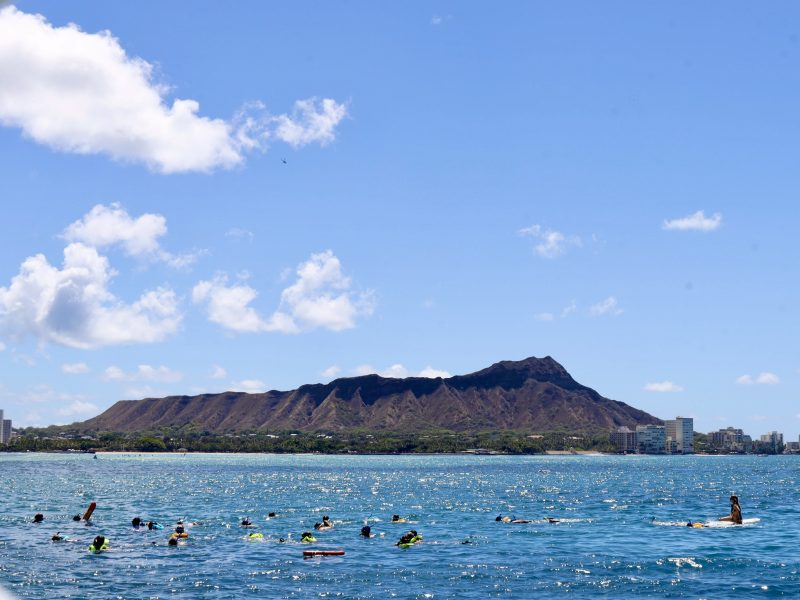
Every place in Hawaii has two names: the English one on the map, and the Hawaiian one that tells you what the place actually is. Learning the Hawaiian names is like getting a second layer of the Island unlocked. Diamond Head is Leahi, named because its silhouette agains the sky resembles the forehead of an ahi fish. Makapu’u means bulging eye. Punchbowl crater is Puowaina, hill of sacrifice. Every name is a story.
Beyond names, Oahu is home to some of the most significant cultural and historical sites in the Pacific, from Iolani Palace to ancient helau still standing across the island.
Myths, Legends, and the Stories
Hawaiian mythology is not separate from Hawaiian geography, it is the geography. The islands were not just created, they were born. The volcano goddess Pele didn’t choose Kilauea at random. She was chased there by her sister Namaka across the entire island chain, and the trail of volcanic activity from northwest to southeast maps her journey exactly.
Maui, the demigod, not the island, fished the Hawaiian islands up from the sea floor with a magical hook. He lassoed the sun from the summit of Haleakala to slow it down so his mother could dry her kapa cloth. These aren’t just stories. THey’re explanations. They’re science, encoded in narrative form, before Western science arrived. Understanding these stories makes every hike, every beach, every summit more meaningful. You’re not just looking at a volcano, you’re standing inside a living myth.
Traditional Hawaiian Games
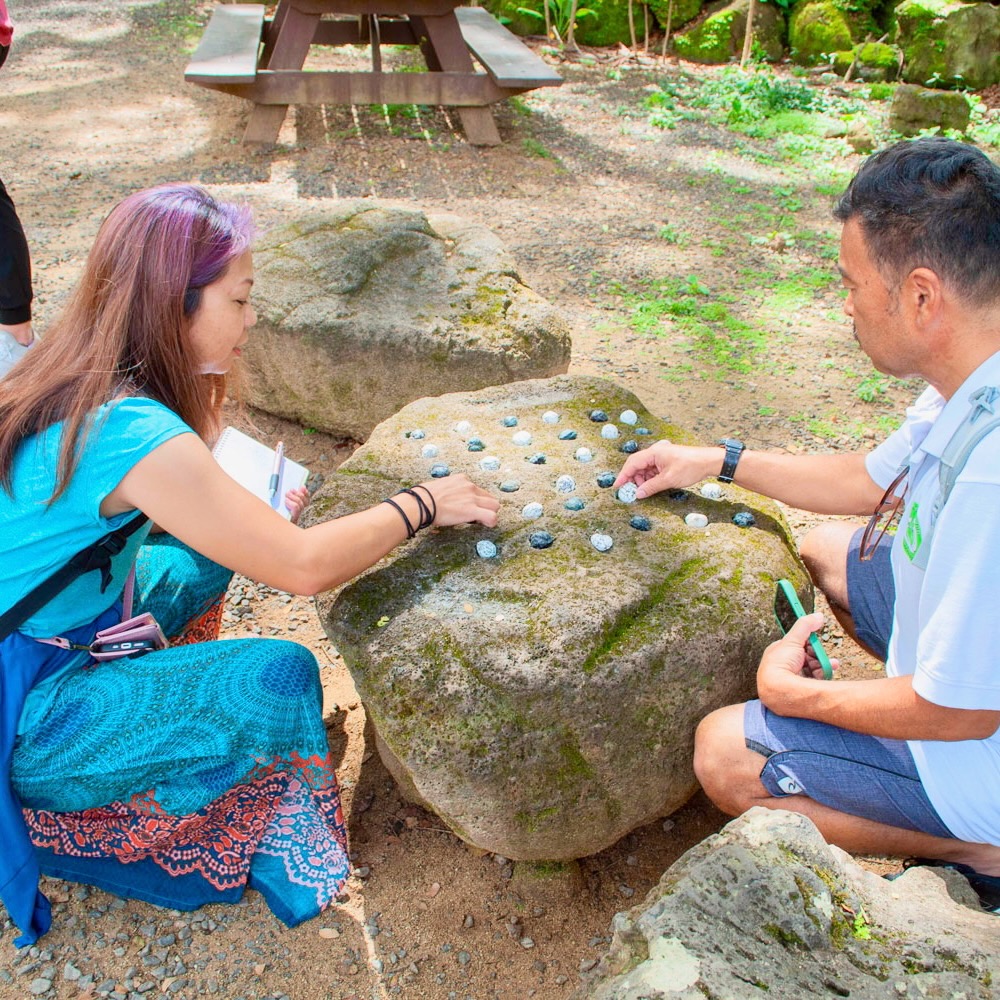
Pre-contact Hawaii had a rich tradition of athletic games, many of which served dual purposes as physical training and spiritual offering. Konane, a strategy game played on a stone board with black and white pebbles, resembles checkers in form but not in origin, it was played by chiefs and commoners alike, and skill at konane was considered a mark of intelligence. Ulu maika, haka moa, and various surfing and paddling contests kept communities sharp and connected. Many of these games are still played today at cultural festivals and yes, at luaus.
Hawaiian culture is not a performance. It’s a living system, still evolving, still being fought for, and still generous to those who approach it with respect. The beaches will always be beautiful, but the culture is what makes Hawaii irreplaceable.
Use the links throughout this guide to go deeper on any topic that interests you. And if you’re planning a trip to Oahu, we run tours built around real local knowledge, not scripts or tourist packages.